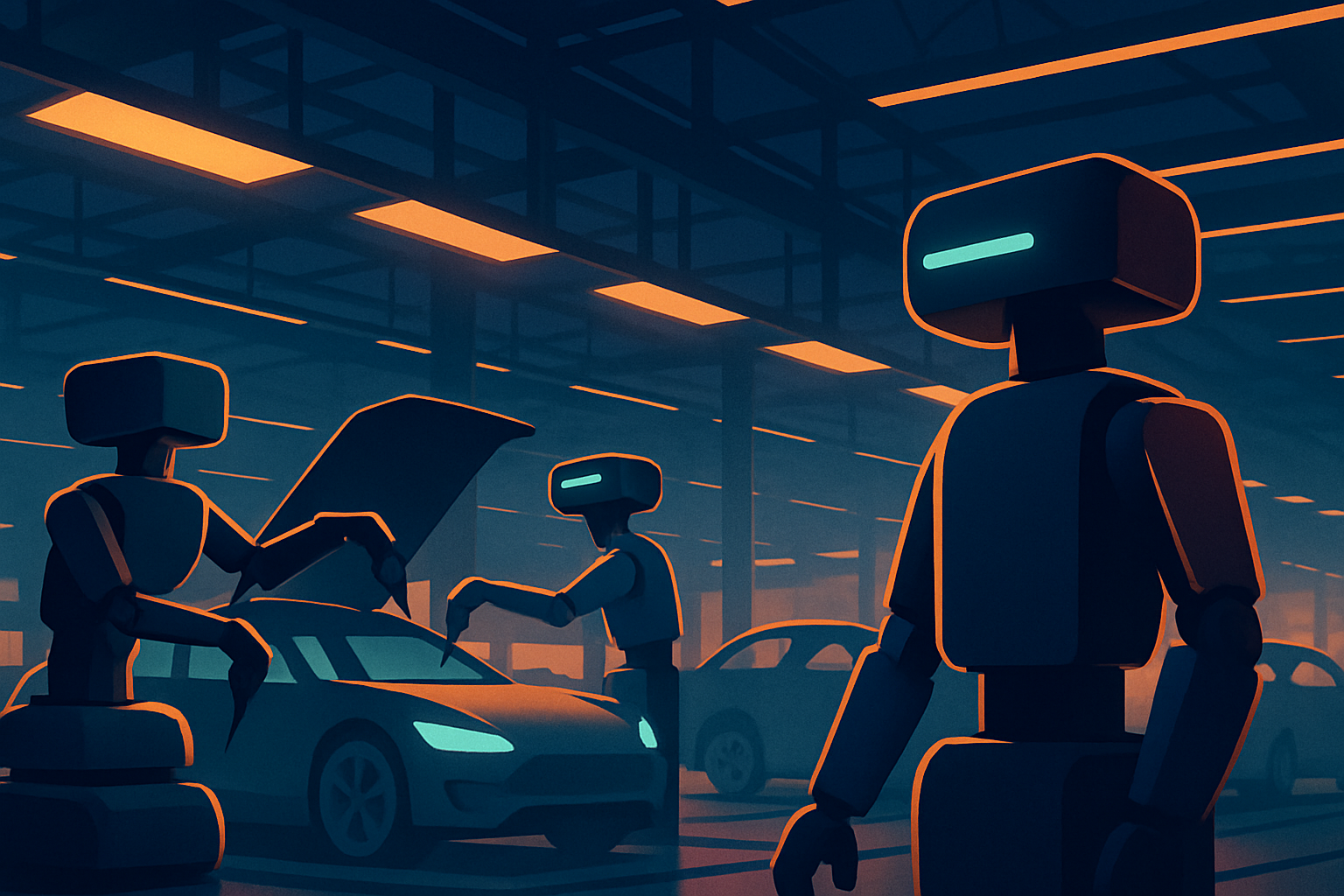
Mind Robotics has raised $400 million in a round led by Kleiner Perkins, with Volkswagen's venture arm and Salesforce Ventures participating — bringing the industrial AI robotics spinout to more than $1 billion in total funding in under 60 days. The company's valuation now exceeds $3.4 billion.
The pace of the fundraising is almost as notable as the number. Mind Robotics raised $500 million in March 2026, just two months ago. Before that, it raised $115 million in November 2025. Three rounds, $1 billion-plus, in six months — from a company that didn't exist in 2024.
What Mind Robotics Is Building
Mind Robotics was created in 2025 as a spinout from Rivian, originally developed internally under the codename Project Synapse. Rivian CEO RJ Scaringe chairs the company, which he founded after concluding that no existing robotics startup was actually equipped to automate real factory work — the kind of dexterous, high-variability manufacturing tasks that have resisted automation for decades.
The company's approach centers on AI-powered robots capable of performing complex manufacturing tasks that require the kind of adaptive physical intelligence conventional industrial arms can't deliver. The deployment environment is not a demonstration facility — it's Rivian's own manufacturing plant in Normal, Illinois, where Mind Robotics robots are actively working on the production line today.
Using a live vehicle factory as a training and validation environment is a significant structural advantage. Real production lines are far more demanding than controlled test settings — variable components, time pressure, safety requirements, and constant process changes. A robot that works in that environment has been tested harder than anything a lab can replicate.
The Investor Signal
Kleiner Perkins leading this round is meaningful. KP has a long track record of identifying category-defining companies early — and their industrial robotics bets have historically been made when they see a team capable of bridging the gap between research and real-world deployment at scale.
Volkswagen's participation is strategic. VW operates manufacturing facilities globally and faces the same dexterous automation challenges as Rivian. Their investment looks less like passive capital and more like an option on future deployment. Salesforce's involvement is interesting given their enterprise software positioning — humanoid robots that operate in factories will need workflow integration, data management, and enterprise connectivity that a company like Salesforce is positioned to provide.
The Broader Race
Mind Robotics is competing in a field that is attracting capital at a pace the robotics industry has never seen. Figure AI closed $1 billion this week at a $39 billion valuation. Physical Intelligenceraised at multi-billion dollar valuations earlier this year. The common thread across all of these companies is a bet that the combination of large AI models and improved hardware has finally crossed the threshold where humanoid robots can perform economically useful work in real industrial environments.
For Houston's manufacturing and energy sector — both of which run on exactly the kinds of physically intensive, high-variability operations these robots are targeting — the question is no longer whether this technology arrives. It is who shows up first, and who has the most credible deployment record when they do.