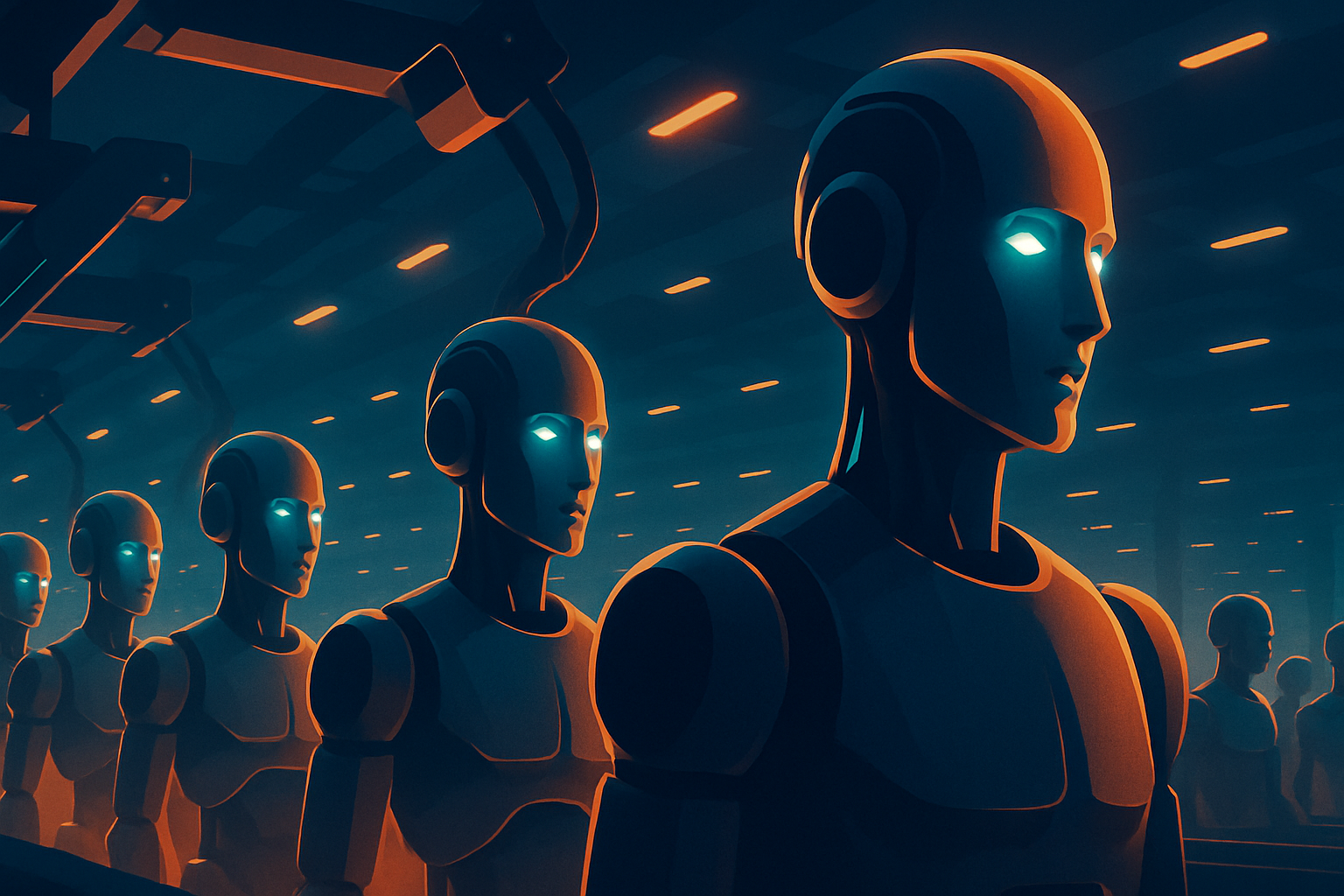
Tesla has started building robots in quantity — and the company is betting its next chapter on doing it at a scale the industry has never seen.
The company began Optimus humanoid robot production at its Fremont, California facility in Q2 2026, with a first-generation line targeting one million units annually. That alone would dwarf the current output of every other humanoid robotics company combined. But the headline number is in Texas: Tesla is breaking ground on a second-generation manufacturing line at its Texas Gigafactory targeting 10 million Optimus units per year in long-term capacity.
The Fremont Pivot
To make room for robot manufacturing at Fremont, Tesla is phasing out its legacy Model S and Model X production lines. The move is not symbolic — it reflects a genuine reallocation of factory floor space and production engineering resources from a legacy automotive product to what Tesla is now calling its primary future business.
The company posted $3.9 billion in operating cash flow and a 21% GAAP gross margin in Q1 2026, giving it the financial position to absorb the transition costs. Site preparation at the Texas location is already underway.
The Technology Stack
Tesla is building its own semiconductor infrastructure to support Optimus at scale. The AI5 inference processor — a custom chip designed in-house — handles the computational demands of real-time robot operation. The company is also developing what it calls Digital Optimus, an intelligence layer designed to automate digital workloads alongside the physical robot's operations.
The vertical integration strategy mirrors what Tesla did with automotive: own the battery cells, the power electronics, the software stack, and eventually the manufacturing process itself. Applied to robotics at this scale, it is either the most ambitious manufacturing program in the history of the industry, or it's the most ambitious manufacturing program in the history of the industry that's actually funded and already in production.
What 10 Million Means
To put the Texas target in context: Boston Dynamics — one of the most mature and widely deployed robot companies in the world — has shipped tens of thousands of units over its entire history. Tesla is targeting 10 million per year from a single facility. Even if the actual output is a fraction of that capacity, the scale of the infrastructure investment signals a fundamental change in how humanoid robots get made and priced.
For Texas specifically, a state that has aggressively attracted manufacturing investment across automotive, semiconductor, and energy sectors, the Optimus production line is another major anchor for high-tech industrial employment. The Texas Gigafactory already employs thousands of workers for vehicle production — the robotics expansion would add manufacturing engineering, quality, supply chain, and technician roles at significant scale.
The transition from EV company to robotics company is no longer a future strategy at Tesla. Production has started. Texas is where the scale-up happens.