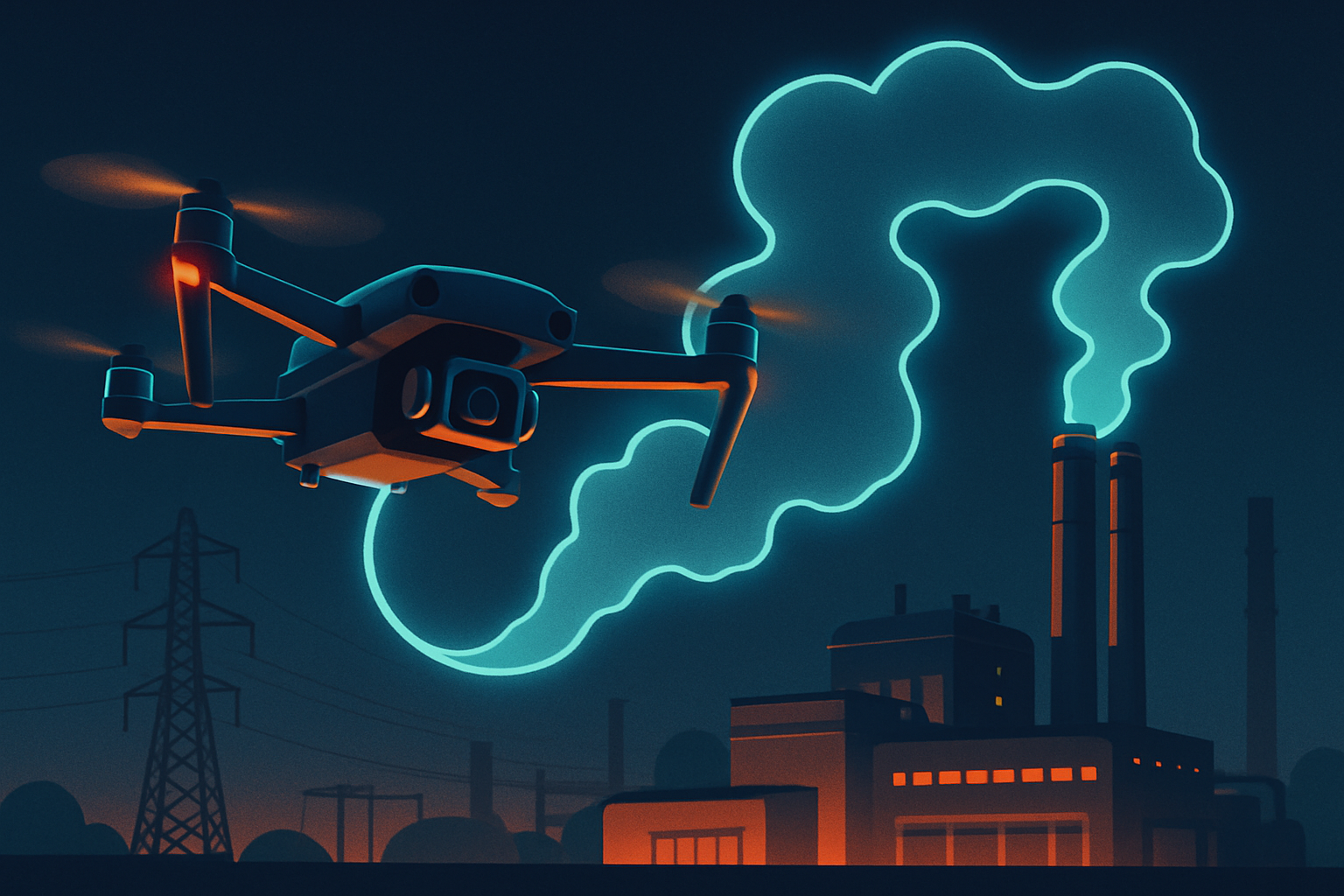
The standard approach to drone-based methane leak detection involves a lot of expensive human attention: a pilot flies the drone, an operator watches the optical gas imaging camera feed, and a trained eye flags potential plumes in real time. Aquanta Vision is automating the last part — the detection itself — by putting AI directly on the camera.
The Houston-based startup has developed patented software that installs on Teledyne FLIR optical gas imaging (OGI) cameras — the same handheld and drone-mounted devices already used by oil and gas operators for leak detection — and adds a real-time automated methane plume detection layer. The software runs locally on the camera, requires no field connectivity, and installs in minutes. The operator still flies the drone. The AI watches the feed and flags the plumes automatically.
Why This Matters for Gulf Coast Energy Operations
Methane leak detection has become a regulatory and operational priority for the oil and gas industry. Federal methane reporting requirements under EPA rules have tightened significantly, and the energy sector is under increasing pressure to demonstrate emissions monitoring at scale. The Gulf Coast petrochemical complex — refineries, processing plants, pipeline networks, offshore platforms — represents one of the largest concentrations of potential methane emission sources in the country.
Drone-based OGI inspection is already the state of the art for covering large areas efficiently. The limiting factor has been the human analysis layer: a trained inspector can only watch so much camera footage, fatigue is real, and manual plume identification is inherently subjective. Aquanta Vision's software removes that bottleneck — the AI detects plumes continuously without fatigue, in real time, during the inspection flight rather than in post-processing.
The local-processing architecture matters operationally. Many inspection sites — offshore platforms, remote pipeline routes, plant interiors — have limited or no connectivity. A system that requires cloud upload for analysis simply doesn't work in those environments. Running on-device means Aquanta Vision works anywhere the drone works.
Who Backed It
The investor lineup on Aquanta Vision's pre-seed round is unusually strategic for a company at this stage. Chevron Technology Ventures and Marathon Petroleum both participated — two major operators with Gulf Coast infrastructure who presumably evaluated the technology against actual inspection workflows before writing checks. EIC Rose Rock led the round, joined by Ecosphere Ventures and Odyssey Energy Advisors.
Strategic operator backing at pre-seed is a meaningful signal. When Chevron Technology Ventures invests in a detection technology company, it's typically because someone inside Chevron's operations has validated that the technology actually works in the field, not just in a controlled demo. The same logic applies to Marathon. CEO Babur Ozden noted the investment reflects "shared excitement" around the technology's ability to improve detection performance for OGI camera operators — language that suggests a working relationship, not just a financial bet.
The Broader Drone Inspection Technology Trend
Aquanta Vision sits at the intersection of two converging trends in Houston's energy sector: the move toward automated aerial inspection and the push to embed AI into the field equipment itself rather than in centralized analysis systems.
The offshore and onshore energy industry has been adopting inspection drones steadily for a decade, driven by cost savings over rope-access inspections and helicopter surveys. The next step — making those drone flights smarter, not just faster — is where the current wave of investment is concentrating. Automated flare stack inspection, pipeline anomaly detection, tank roof assessment, and now methane plume identification are all following the same pattern: replace human visual analysis with AI that runs in real time on the drone.
For Houston's energy sector specifically, automated inspection technology has a natural home. The scale of Gulf Coast infrastructure makes comprehensive manual inspection economically impossible. Technology that makes each drone flight more productive — catching more leaks, generating cleaner data, requiring less human review time — has a clear return on investment in an environment where a single undetected methane leak can generate both emissions liability and operational losses.
Aquanta Vision is early stage. The technology is validated enough to attract serious strategic investors, but the commercial rollout is still ahead. What's notable is that the company chose to solve the hard part first: making the AI work on the camera, in the field, without connectivity, at inspection speed. The distribution problem — getting operators to adopt it at scale — is real but solvable once the technology is proven. The technology appears to be getting there.
Coverage of Aquanta Vision based on reporting by Energy Capital HTX. Original story: energycapitalhtx.com.