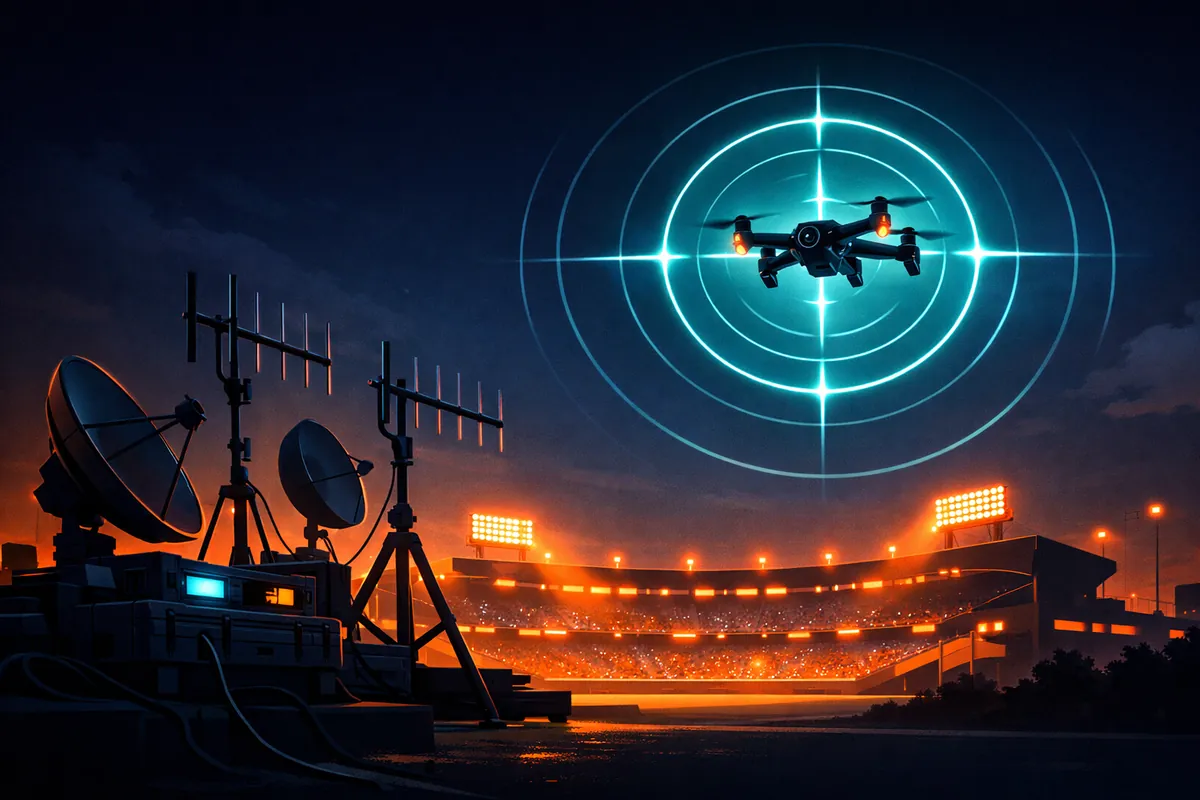
Houston wants more tools to deal with drones that show up where they should not. On November 4, City Council approved an application for federal counter-drone funding as part of its consent agenda, with no recorded debate.
What Council Approved
The ordinance (No. 2026-0982) authorizes the city to apply for the Fiscal Year 2027 Counter Unmanned Aircraft Systems Grant Program, run by the Department of Homeland Security through FEMA and passed through the Texas Governor's Public Safety Office. The application comes from the Mayor's Office of Public Safety and Homeland Security, and much of the resulting capability would sit with the Houston Police Department.
This is an application, not a purchase. The state assembles a combined Texas request, and FEMA decides awards. Houston's share has not been set. According to DroneXL's reading of the FEMA program materials, this round is worth $250 million nationwide, Texas's allocation is about $10.5 million, and awards are expected in December.
What the Money Buys
Local TV coverage described the grant as putting "more eyes in the sky." The program is mostly about the opposite: equipment to find and stop other people's drones. It covers systems to detect, identify, track, and mitigate unauthorized drones. In practice that means sensors such as radar, radio-frequency direction finders, cameras, and receivers for the Remote ID signal most drones must now broadcast, plus mitigation tools such as jammers or systems that take control of a drone. The city's agenda says the goal is to enhance detection and mitigation at large special events in the region.
Federal law limits who can use the mitigation side. Only accredited law enforcement agencies can operate it, using officers certified through the FBI's counter-drone training program.
"Houston is a big city, and we do big things here," Larry Satterwhite, director of the Mayor's Office of Public Safety and Homeland Security, told KPRC.
The Rules Come Later
City officials told KPRC they are still working on guardrails for how the technology will be used. Council voted before those were finished. The open questions are practical ones: which agency operates mitigation, at which events, and how long detection data, which can include the location of drone pilots who broke no rules, is kept.
This is not Houston's first round. Council approved an application tied to the World Cup earlier this year, and the region's agencies have been building up drone capability on both sides: police and fire departments are adding their own aircraft, including first-responder drones built in Houston. As drones become common tools for police, delivery companies, and hobbyists alike, the systems that sort the authorized ones from the rest are becoming part of how big events are run.
Based on the City of Houston's November 4, 2026 council agenda (Ordinance 2026-0982), reporting by KPRC Click2Houston (November 2 and 4), and DroneXL (November 3 and 6). Program dollar figures and equipment categories are from DroneXL's summary of FEMA program materials.