Houston is quietly becoming one of the busiest proving grounds for autonomous vehicles in the country. A new partnership between Uber, autonomous-driving company Nuro, and EV maker Lucid Group is bringing a premium robotaxi service to the city — and it's arriving in a market where Waymo is already operating. For a technology that is fundamentally robotics on wheels, the Gulf Coast's largest city is turning into a real-world test bed.
The New Entrant: Uber + Nuro + Lucid
The three-way partnership splits the work along each company's strength. Lucid supplies the vehicles — starting with its Gravity electric SUVs and, later, a planned midsize model. Nuro supplies the brains: its "Nuro Driver" Level 4 universal autonomy platform, which is designed to operate without a human driver within its operating domain. Uber supplies the demand and the network, dispatching the vehicles through its ride-hail app as a premium service.
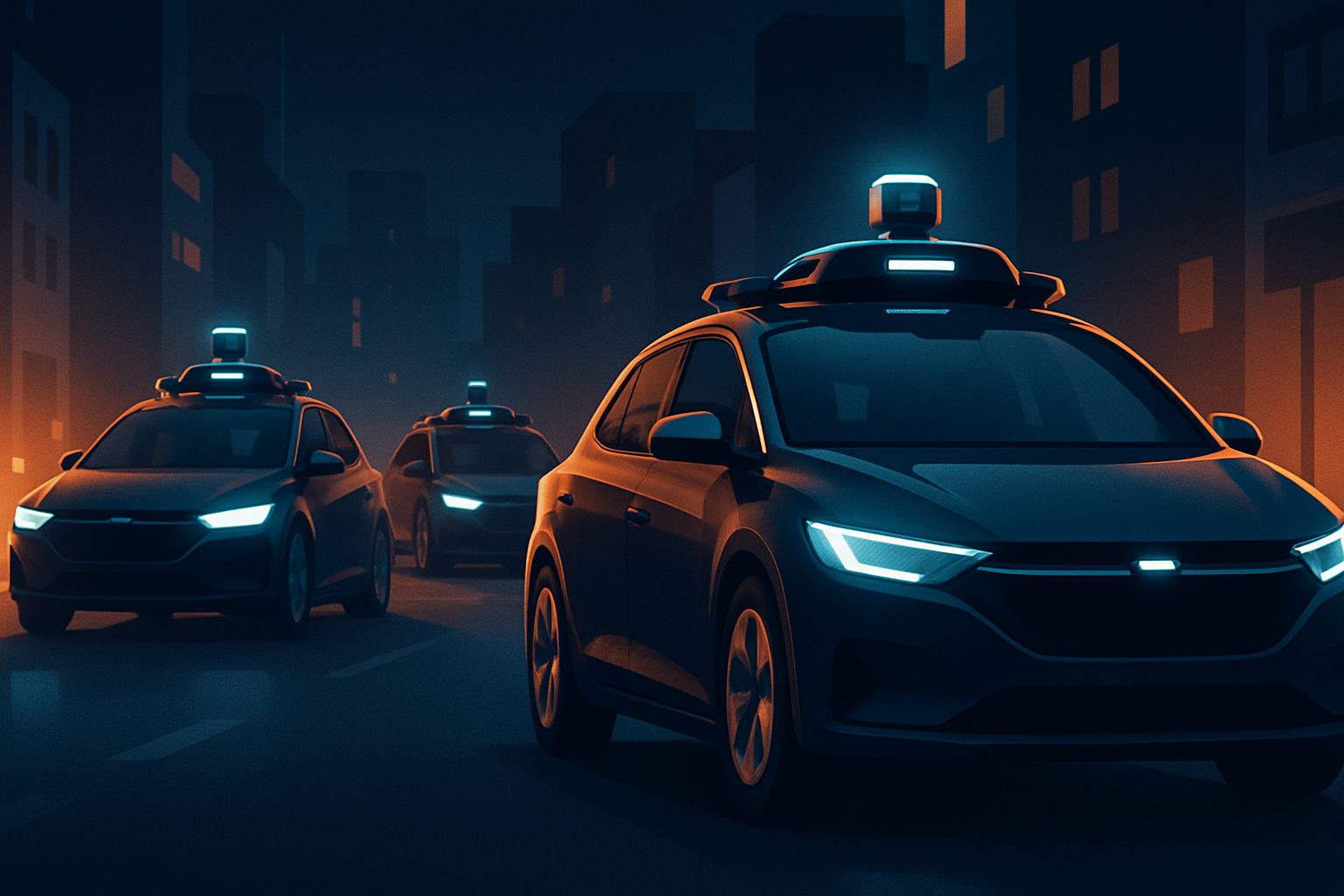
The initial fleet will number around 100 vehicles spread across California and Texas. Each is equipped with a redundant sensor suite — cameras, lidar, radar, and a roof-mounted sensor array — the layered perception stack that lets a Level 4 system cross-check what it's seeing before making a driving decision. Nuro is currently running supervised on-road testing with safety operators aboard, the standard step before any driverless deployment.
Uber's premium robotaxi service is slated for a mid-2027 rollout, with Houston positioned as its second market after the San Francisco Bay Area. The company has already committed significant physical infrastructure to the city: a 50,000-square-foot depot with dedicated charging, plus facilities for vehicle maintenance, repairs, cleaning, and fleet operations. That kind of fixed investment signals this is a long-term play, not a pilot.
"Houston's large, complex metro area is an ideal market for demonstrating how Nuro's universal autonomy platform can generalize across different geographies," said Andrew Chapin, Nuro's chief operating officer. The pitch is telling: Houston's sprawl, weather, and traffic complexity are features, not bugs, for a company trying to prove its system works anywhere.
Waymo Got There First
The Uber-Nuro-Lucid service won't have Houston to itself. Waymo, the Alphabet-owned autonomous driving pioneer, launched its program in Houston in February 2026. The rollout hit an only-in-Houston obstacle when flooding forced a temporary service suspension — a vivid reminder that autonomous systems have to contend with Gulf Coast realities that don't exist in the deserts of Arizona — but the company has since resumed full activity.
With Waymo already running and a second major service on the way, Houston is shaping up as one of the most competitive robotaxi markets in the U.S. — a status that brings real autonomous-vehicle engineering, operations, and infrastructure jobs to the region.
Why This Belongs in Houston's Robotics Story
It's easy to file robotaxis under "transportation" rather than "robotics," but a self-driving car is a robot in the fullest sense: a perception-planning-control system that senses its environment, makes decisions, and acts on the physical world without human input. The same core technologies — sensor fusion, computer vision, real-time path planning — power the inspection drones and autonomous trucks that are reshaping Houston's energy and logistics sectors.
Houston's autonomous-vehicle activity extends well beyond ride-hail. Kodiak Robotics runs autonomous trucks on Texas freight lanes, and the region's enormous port and logistics flows make it a natural environment for self-driving freight. The arrival of multiple robotaxi operators adds a consumer-facing dimension to an autonomy ecosystem that has, until now, been mostly industrial. For a city that wants to be taken seriously as a robotics hub, having Waymo, Uber, Nuro, and Lucid all operating on its streets is a meaningful credential.
Reporting based on coverage by InnovationMap. Original story: innovationmap.