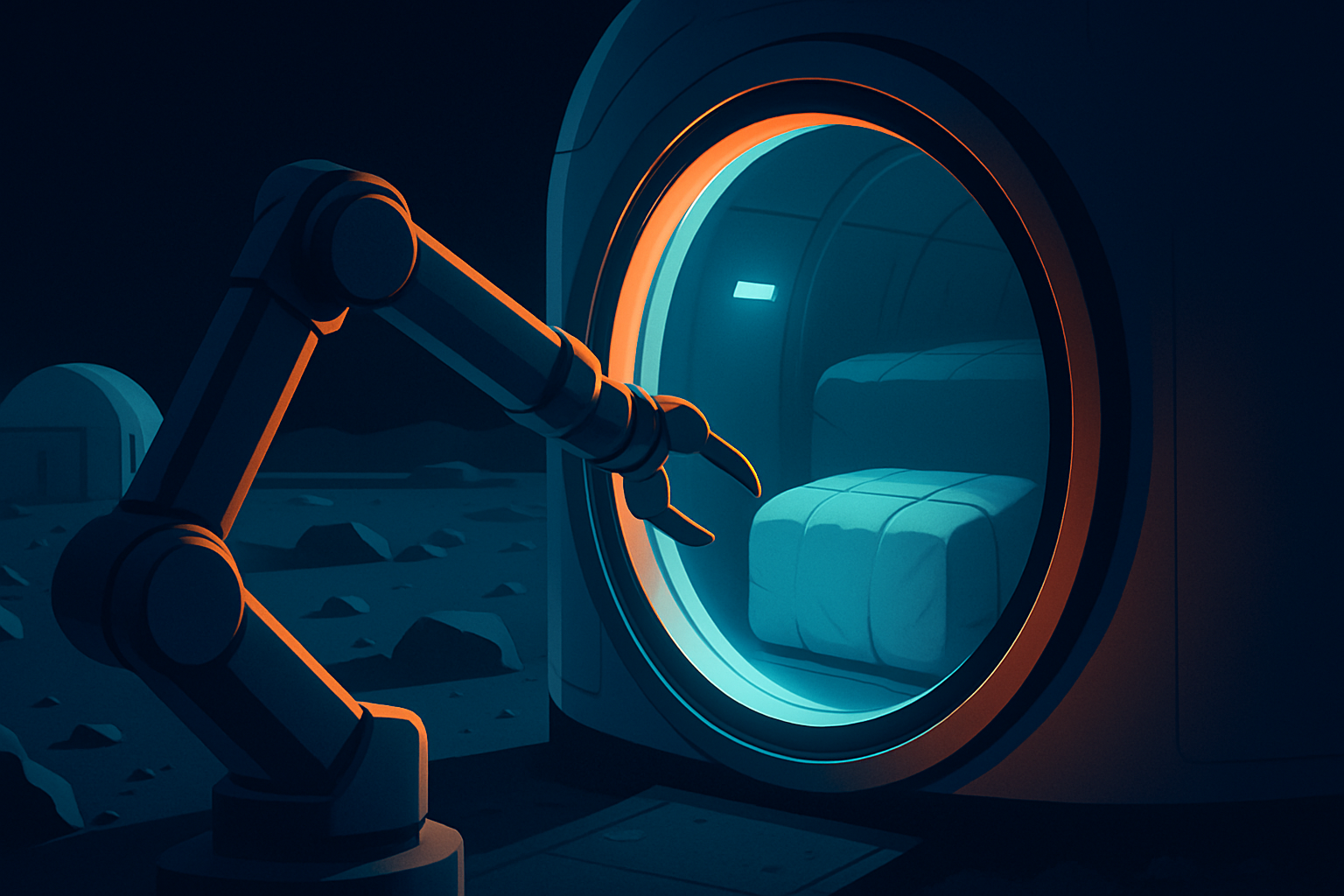
When astronauts return to the Moon to stay, a lot of the work waiting for them will be dull or dangerous: moving cargo, maintaining equipment, making repairs outside. A small team at Johnson Space Center is trying to hand those jobs to robots.
The Team
NASA's Dexterous Robotics Team has 16 members and sits inside the Robotic Systems Technology Branch at JSC. Its focus is software and mechatronics, the point where control code meets hardware. Team lead Shaun Azimi has been clear about the aim: the group is "not trying to replace human explorers with robots, but instead make human exploration safer and more sustainable," he said in recent coverage of its work.
The team builds on more than fifteen years of humanoid work at the center. Robonaut 2 spent seven years aboard the International Space Station, and Valkyrie, completed in 2013, was built to work in damaged environments designed for people. Both are covered in our guide to space robotics at JSC.
What Makes Space Robots Hard
Azimi's description of the requirement is that robots must be "highly capable, reliable, and trustworthy." Each of those is harder off Earth. Lunar dust is abrasive and gets into joints and seals. Radiation damages electronics. Nobody is available to walk over and reset a machine that has stopped. A robot that works nine times in ten is useful in a warehouse and a liability on the Moon.
iMETRO: A Test Site Open to Industry
The team's main facility is iMETRO, the Integrated Mobile Evaluation Testbed for Robotics Operations. It combines open-source software and simulation tools with physical mockups of spacecraft and habitats, several different robots, and an outdoor rock yard that stands in for the lunar surface.
Outside companies can use it, and that is the part with local consequences. In one recent test, robotics software firm PickNik ran code that let a robot arm recognize a spacecraft hatch, turn the latch, grasp the handle, open the door, and move cargo bags through it. Unpacking a supply vehicle is exactly the kind of routine chore that eats crew time.
Why It Matters Here
The work at JSC has a history of leaving the building. Nicolaus Radford, who led Valkyrie, went on to found Nauticus Robotics and then Persona AI, which is now raising a large round to build industrial humanoids. A robot that can be trusted to work unattended in lunar dust has solved most of what a robot needs to work unattended on an offshore platform or in a refinery.
A testbed that companies can book makes that transfer easier. For robotics firms in the Houston area, it means a place a short drive away to try hardware and software against realistic space conditions, alongside the people who will eventually decide what flies.
Based on NASA Johnson Space Center coverage of the Dexterous Robotics Team and iMETRO, and reporting by Popular Science, September 30, 2026.