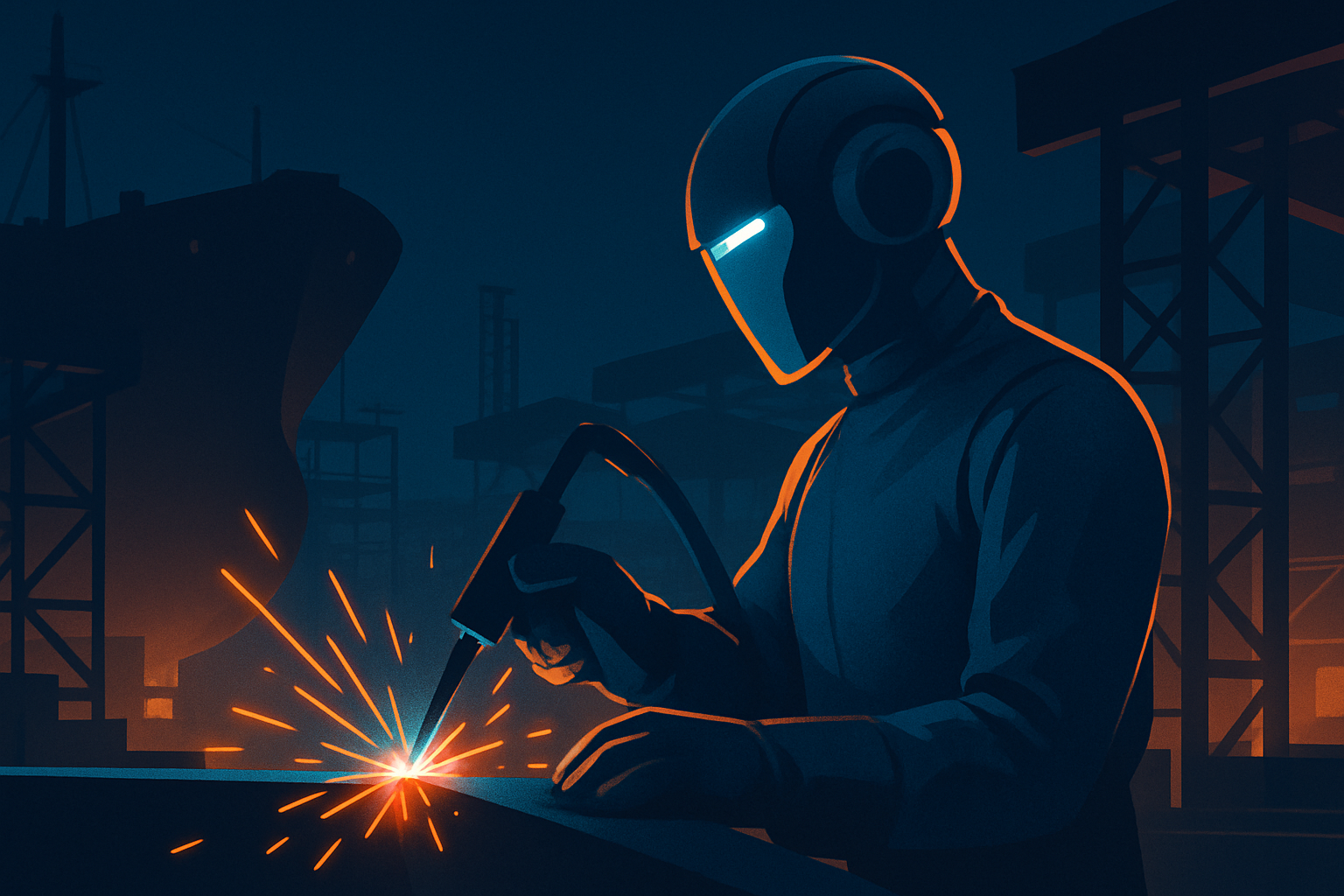
When you picture what protects a humanoid robot doing hazardous industrial work, you probably don't think of the company that makes performance compression shirts. Houston-based Persona AI is betting you should. The humanoid robotics startup has partnered with Under Armour to adapt the sportswear maker's advanced performance textiles into protective coverings for robots operating in dangerous environments — starting with the shipyard.
An Unexpected Pairing With a Clear Logic
The partnership, announced in late May, pairs two very different kinds of materials expertise. Under Armour spent two decades engineering fabrics that manage heat, resist abrasion, and stay flexible under extreme physical stress — for human athletes. Persona AI builds humanoid robots designed to take on the kind of dirty, dangerous industrial jobs that are hard to staff. The research collaboration asks a simple question: can the textiles built to protect athletes also protect machines?
The areas of focus map directly onto the problems a working robot faces. Thermal management matters when a robot operates near welding arcs and hot metal. Abrasion resistance matters in a shipyard full of rough steel and sharp edges. Flexibility matters because a protective skin that restricts a robot's range of motion defeats the purpose. These are the same engineering trade-offs Under Armour navigates in athletic gear, applied to a new kind of body.
"Robotics presents a fascinating new design challenge, and we aim to play a leading role," said Kyle Blakely, Under Armour's senior vice president of innovation. For a sportswear company, robot protection is an entirely new product category — and a signal of how far the materials science behind performance apparel can travel.
Who Persona AI Is
Persona AI is one of Houston's most credentialed robotics startups despite its youth — the company was founded in June 2024. Its leadership reads like a who's who of humanoid robotics. CEO Nicolaus Radford is a former NASA engineer who served as principal investigator at NASA's Dexterous Robotics Lab and was chief engineer behind Robonaut 2, the humanoid robot that flew to the International Space Station. Co-founder Jerry Pratt was previously CTO at Figure AI, one of the most prominent humanoid robotics companies in the world.
The company is building humanoid robots aimed squarely at heavy industry, with a specific early focus on complex welding tasks in shipbuilding. Persona AI has lined up partnerships with HD Korea Shipbuilding and HD Hyundai Robotics — connecting a Houston startup to one of the largest shipbuilding operations on the planet. Shipyard welding is brutal, skilled, dangerous work with chronic labor shortages, making it a logical proving ground for industrial humanoids.
Why the Protection Problem Matters
The Under Armour partnership points at an under-discussed reality of deploying humanoid robots in the real world: these are expensive, complex machines, and the environments they're meant to work in are exactly the ones that destroy equipment. A humanoid robot covered in sensors, actuators, and wiring needs protection from heat, sparks, abrasion, moisture, and impact — without being so heavily armored that it can't move or so sealed that it overheats.
That's a materials problem as much as a robotics problem, and it's the kind of detail that separates a demo-stage robot from one that can survive a real industrial shift. By solving it with textiles engineered for flexibility and thermal management rather than rigid plating, Persona AI is taking a page from how nature protects moving bodies — and from how Under Armour protects moving athletes.
The Houston Angle
Persona AI is a flagship example of Houston's emerging position in humanoid robotics. The city's deep bench of energy, aerospace, and heavy-industry expertise — plus a NASA-trained robotics talent pool from Johnson Space Center — gives it a credible claim to industrial humanoid development that's distinct from the consumer-facing humanoid race in California. Persona AI is building robots for shipyards, refineries, and fabrication floors, the kinds of environments that surround Houston.
The Under Armour deal also shows how robotics is pulling in expertise from adjacent industries. As humanoid robots move from labs into hazardous workplaces, the companies that know how to protect bodies under stress — whether human or mechanical — become unexpected players in the robotics supply chain.
Reporting based on coverage by InnovationMap. Original story: innovationmap.