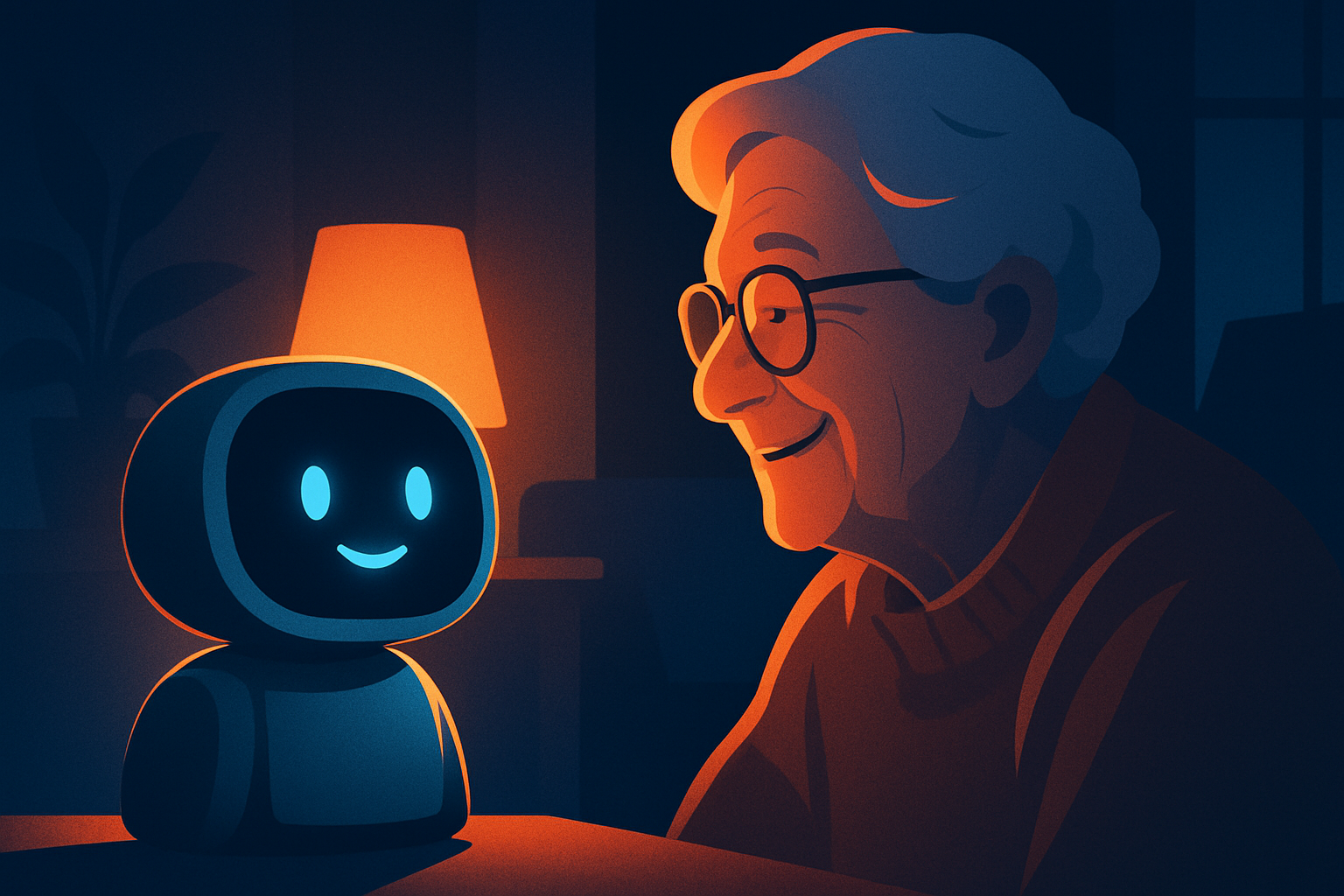
Most AI and robotics products are designed by young people, for young people, and then handed to everyone else. A new lab at the University of Houston is trying to invert that — by designing AI companion robots for older adults with older adults, starting from their fears and preferences rather than a finished product looking for users.
What ELARA Is
The Empathetic Lifespan AI & Robotics for Aging (ELARA) Lab launched in May 2026 within UH's Gerald D. Hines College of Architecture & Design, under the leadership of Assistant Professor Chorong Park. Its mission targets two of the hardest problems of aging: managing disability and combating social isolation — the latter being a documented public-health crisis among seniors with effects comparable to chronic disease.
The lab's core work is designing AI companion bots tailored specifically to the needs of older people. That sounds straightforward until you account for the trust problem at the center of it. "They won't use the robot if they don't feel at ease or if they feel they are being constantly watched," Park explained. A companion robot packed with cameras and microphones is, to many older adults, indistinguishable from a surveillance device — and an unused robot helps no one.
Designing With Seniors, Not For Them
ELARA's methodology is what makes it notable. Rather than building a robot and testing it on seniors at the end, the lab brings older adults into the design process from the start. In a collaboration with the Mamie George Community Center in Richmond, Texas, the lab had seniors test desktop AI bots — including expressive companion robots like Emo and Cupboo — and then used modeling clay to let participants physically sculpt their ideal robotic companion.
That clay exercise is a small but meaningful act of inclusion. It treats older adults as designers with valid preferences about what a helpful machine should look and feel like, rather than as test subjects. Park's research frames the alternative — excluding older populations from technology development — as a driver of the widening "technology gap" and a form of built-in ageism. When AI is created for younger people by default, the people who might benefit most from assistive technology get products that don't fit their lives.
The Risks the Lab Takes Seriously
ELARA's work doesn't shy away from the downsides of emotionally engaging AI. Park's research acknowledges documented cases of unhealthy attachment and even "AI psychosis" among isolated users — a particular danger for a population where, by some estimates, roughly a quarter of Americans over 65 experience meaningful social isolation. A companion bot that becomes a substitute for human connection rather than a bridge to it can do harm.
That tension — between a robot helpful enough to combat loneliness and one so engaging it deepens isolation — is exactly the kind of question that gets ignored when assistive robots are built primarily as engineering demonstrations. Designing for it requires the human-centered, participatory approach ELARA is built around.
Why It Matters for Houston
ELARA situates Houston in a part of the robotics landscape that often gets overshadowed by industrial and energy automation: assistive and social robotics for healthcare and aging. With the largest medical complex in the world in the Texas Medical Center and a large, diverse aging population, Houston is a logical place to develop and validate care robotics that actually work for the people who use them.
It also reflects a maturing of the regional robotics ecosystem. A robotics hub isn't just companies shipping hardware — it's also university labs asking hard questions about how these machines should be designed, who they're for, and what they might do to the people who depend on them. ELARA is doing that work in Houston.
Reporting based on coverage by InnovationMap. Original story: innovationmap.