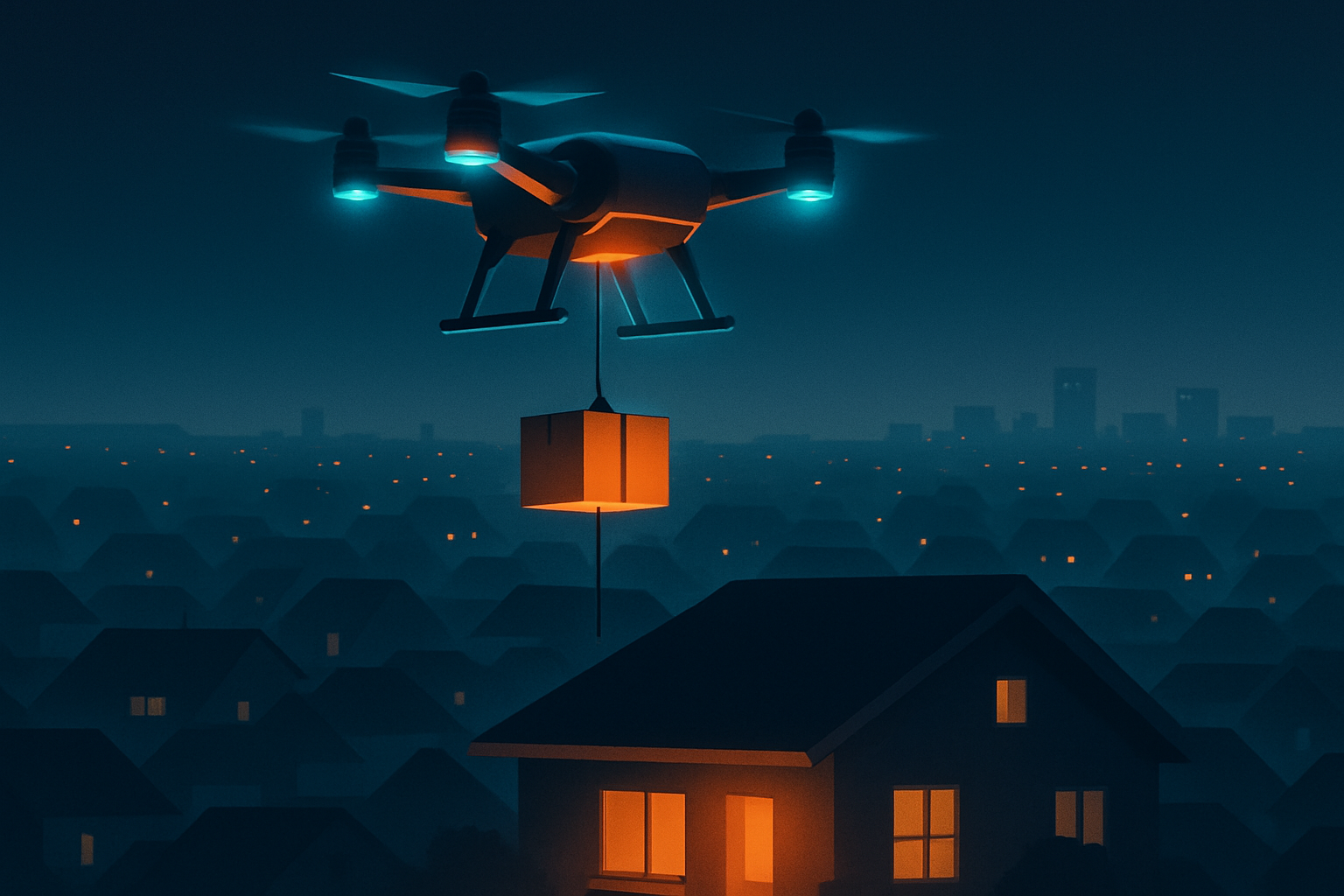
The autonomous machines reshaping Houston aren't all a mile underwater or on a factory floor — some are hovering over the suburbs with your groceries. Walmart and drone-delivery company Wing have sharply expanded their Houston-area drone network, adding eight new stores in July to reach 13 locations serving more than a million residents.
How It Works
The service is genuinely autonomous aerial logistics. A customer orders everyday Walmart essentials — the classic examples are eggs and coffee — and a Wing drone flies the package out from the store. The drones cruise at around 150 feet, hit speeds up to 60 mph, and complete the average delivery flight in under five minutes. At the destination, the drone hovers at roughly 23 feet and lowers the package gently by tether, which protects fragile goods like a carton of eggs from a hard landing.
The pitch, in Wing's own words, is that drone delivery lets residents “bypass notorious Houston traffic to get everyday Walmart essentials delivered by drone in minutes” — a value proposition that lands differently in a sprawling, congested metro like Houston than almost anywhere else.
The Expansion
The program launched in January 2026 with five stores — in Crosby, Katy, Houston, and Kemah. The July 10 expansion more than doubled that footprint, adding eight locations spread across Houston, Spring, New Caney, and beyond, along corridors like Tomball Parkway, FM 1960, US-59, and Highway 6. The rapid scale-up from 5 to 13 stores in six months signals that the economics are working well enough to keep growing.
Why It Matters for Houston
Houston's geography makes it an unusually strong proving ground for delivery drones. The metro is vast and low-density in its suburbs, traffic is legendarily bad, and the flat terrain and generally clear weather are friendly to aerial operations. A short drone hop can beat a car stuck on the freeway by a wide margin — exactly the conditions that make last-mile drone delivery pencil out.
It also adds a visible, consumer-facing layer to Houston's broader autonomy story. The region is already a hub for industrial and inspection drones — the focus of the annual Energy Drone & Robotics Summit in The Woodlands — and startups like Aquanta Vision and Haast are pushing drones into methane detection and medical logistics. Walmart's grocery drones bring that same core technology — autonomous flight, navigation, and precise payload handling — to everyday consumers, one carton of eggs at a time.
Reporting based on coverage by InnovationMap. Original story: innovationmap.