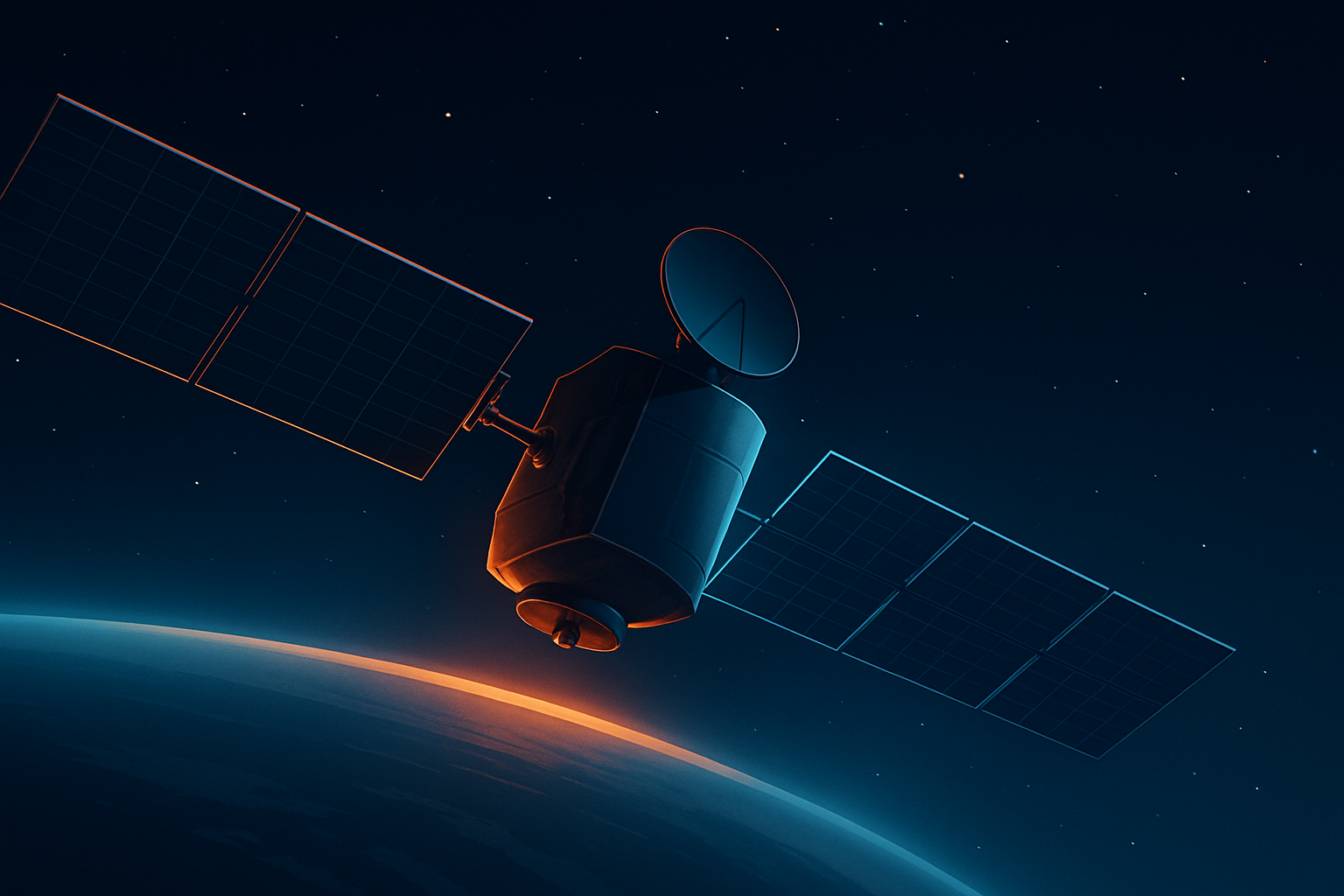
Two contracts in two days moved Intuitive Machines further from being a Moon-lander company and closer to being a general-purpose builder of spacecraft. On August 21 the Houston firm disclosed a $600 million-plus deal to build three commercial satellites, and a day later NASA selected its spacecraft bus for an Earth-observation mission.
The Commercial Deal
The larger contract covers design, manufacture, setup, and support of several spacecraft for what the company describes as a critical communications infrastructure mission, delivered over roughly two years for an undisclosed customer. CEO Steve Altemus framed it as reflecting "the confidence our customers place in our ability to deliver high-performance spacecraft for a broad range of mission needs" — language aimed squarely at positioning the company as a spacecraft manufacturer rather than a lunar-delivery specialist.
The NASA Contract
The following day NASA picked Intuitive Machines' IM-300 spacecraft bus for the EAGLE-VSWIR mission, launching in 2028, along with mission support services. The spacecraft will carry a hyperspectral visible-to-shortwave-infrared instrument to study surface biology and geology, with findings also feeding future lunar and Mars exploration technology.
A spacecraft bus is the platform layer — power, propulsion, attitude control, communications, thermal management — that a mission's instruments bolt onto. Selling the bus rather than the whole mission is the productized end of the space business, and it is exactly the direction the company has signaled it wants to go.
The Pattern
This is the same thesis behind its robotics and mechanisms Center of Excellence: shift from bespoke, one-off aerospace engineering toward repeatable manufacturing. The financials suggest it is working. The company reported a record $1.8 billion order backlog as of June 30 — up $1.5 billion year over year — projects 2026 revenue between $900 million and $1 billion, and says it has produced more than 300 spacecraft to date.
For Houston, it means the city's most visible commercial-space company is diversifying well beyond the Moon. Its lunar lander work and Mars mobility research continue, but the revenue base is broadening into satellites and spacecraft platforms — a more durable business than mission-by-mission contracts. Explore more Houston space and robotics companies in our directory.
Reporting based on coverage by InnovationMap. Original story: innovationmap.