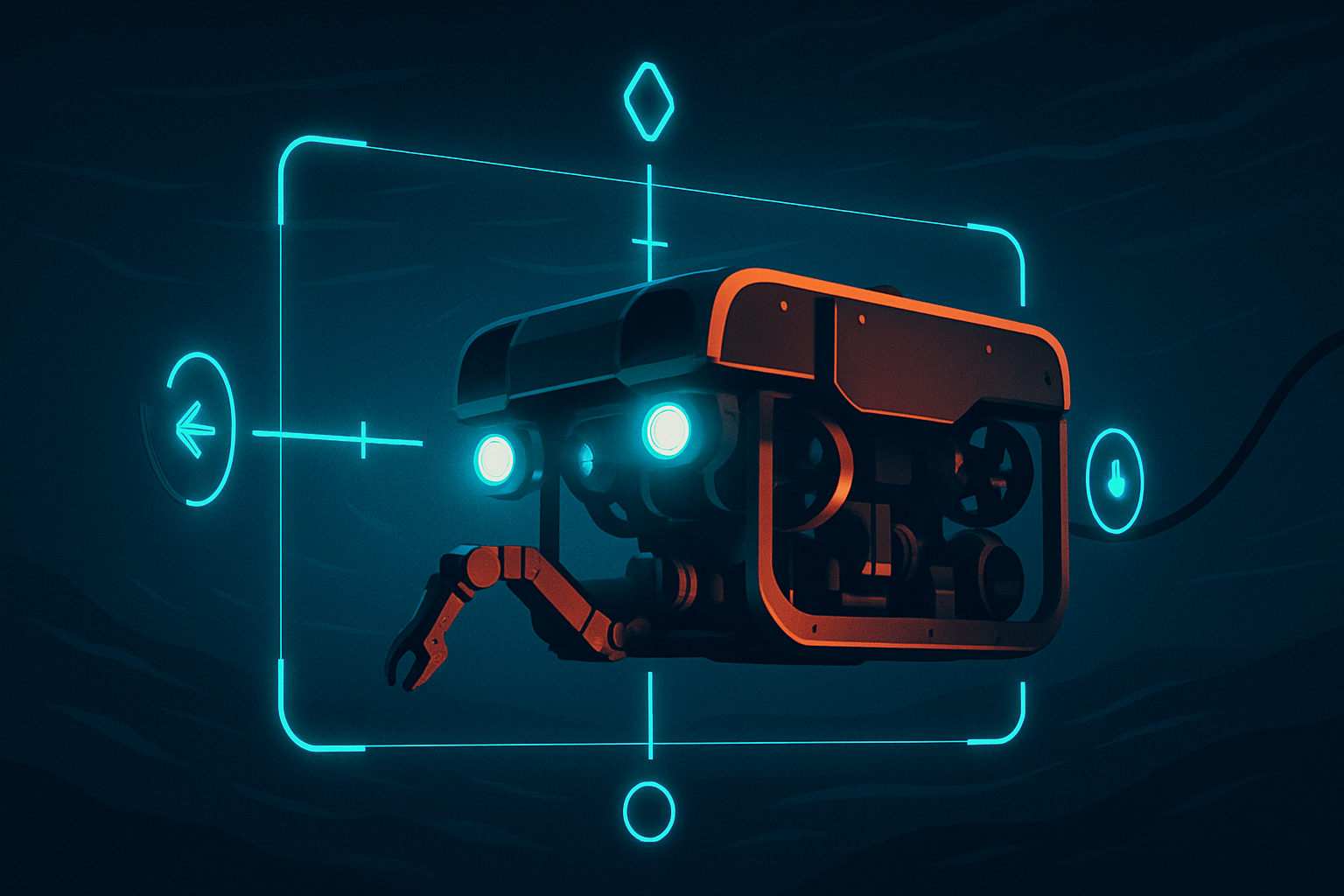
Nauticus Robotics spent years building the Aquanaut, an autonomous underwater vehicle designed to make the tethered work-class ROV look obsolete. On September 9 it started selling something considerably less romantic and possibly more commercially sensible: the autonomy software on its own, to run on the ROVs the industry already owns.
What ToolKITT Does
Nauticus ToolKITT is a vehicle-agnostic autonomy suite now available as a licensed software product to fleet operators, vehicle manufacturers, and defense contractors. Its Pilot Assist module is explicitly not a pilot replacement — it holds the vehicle steady, compensates for currents, and supports waypoint navigation while the ROV stays under operator supervision.
Anyone who has watched ROV footage understands why that matters. A pilot flying a work-class vehicle in a current spends an enormous share of attention simply holding position — constant thruster corrections against water that will not stay still. Automating station-keeping doesn't eliminate the pilot; it frees the pilot to focus on the actual task. Nauticus reports greater than 20% improvement in vehicle operating efficiency and reduced pilot workload in commercial operations.
The Strategic Shift
CEO John Gibson framed the logic bluntly: "Operators are short of experienced pilots and under pressure on price, and most of them are not in a position to replace their fleets. Nauticus ToolKITT gives them a way to modernize the vehicles they already run."
That is a meaningful repositioning. Selling a novel autonomous vehicle requires a customer to retire working capital equipment, retrain crews, and bet on an unproven platform — a long, expensive sales cycle. Selling software that upgrades the fleet they already operate removes nearly all of that friction. The total addressable market stops being "operators willing to replace their ROVs" and becomes "operators with ROVs."
It is also the same pattern winning elsewhere in robotics right now. Construction robotics startups converged on retrofitting existing excavators rather than building new machines. Abagy sells welding autonomy that runs on FANUC, KUKA, and Yaskawa arms rather than making its own. In each case the insight is the same: the installed base is the market, and the defensible product is the intelligence layer, not the steel.
The Financial Backdrop
Context matters here, and it cuts both ways. Nauticus has been candid about its position — we covered its pivot toward deep-sea critical minerals on a $250 million equity line against thin revenue, and in late September the company announced a 1-for-6 reverse stock split, typically a move to maintain exchange listing compliance rather than a sign of strength.
Against that, the operational signals are genuinely better. The company reported substantially stronger third-quarter offshore activity with both ROV systems deployed, and its untethered Aquanaut work has drawn contracts from Shell, Petrobras, and Equinor. A licensed software product carries far better margins than vehicle services and doesn't require capital to scale — which is exactly what a company in this position needs.
Why It Matters for the Gulf
The Gulf of Mexico runs on an aging installed base of work-class ROVs, operated by a shrinking pool of experienced pilots — the same demographic squeeze hitting welders and machinists across the region. Software that makes existing vehicles more productive and less demanding to fly addresses that directly, without asking anyone to buy a new robot.
For Houston's subsea robotics cluster, it's another data point in a clear direction: the competitive frontier is moving from vehicles to autonomy and data. Explore the companies working on it in our directory.
Based on Nauticus Robotics announcements of September 2026 and subsea industry trade coverage.