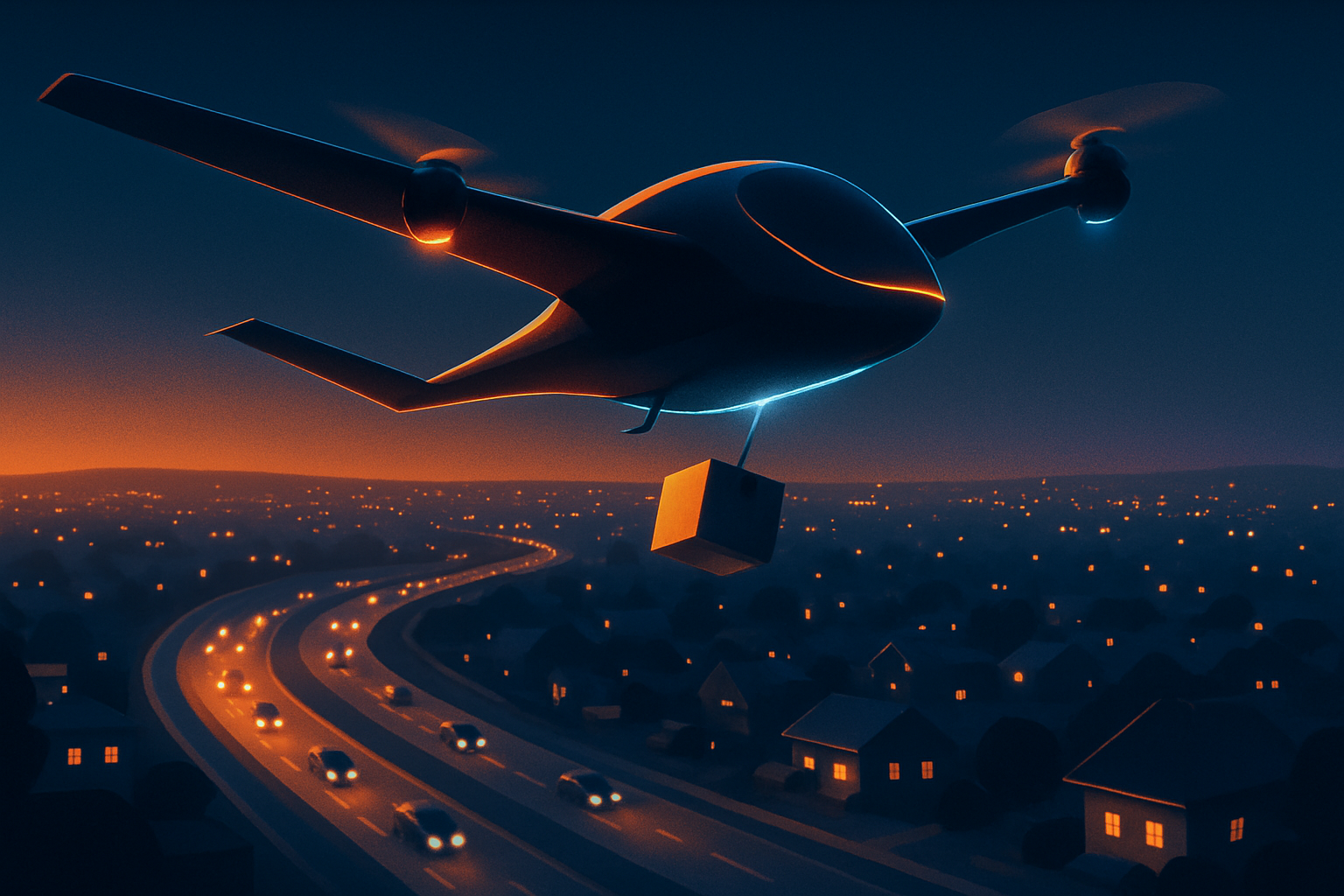
Houston's skies just got more competitive. On August 17, Uber and drone-delivery company Zipline announced a long-term partnership — backed by a strategic investment from Uber — to put autonomous drone delivery directly inside the Uber Eats app. Houston and Dallas are the first two markets, with deployments beginning later this year.
What Was Announced
The deal integrates Zipline's existing drone operations into Uber Eats, so customers order through the app they already use rather than downloading a separate one. That distribution shortcut is the whole point: drone delivery's hardest commercial problem has never been flying the aircraft, it's getting enough customers and merchants onto the platform to make routes economical.
Zipline's drones deliver food and everyday essentials in five to ten minutes on average, against a current U.S. average delivery time of roughly 18 minutes. The two companies have set a striking target: one million deliveries per day by the end of 2029. Uber's CEO framed it as "shaping the future of delivery"; Zipline's put it more vividly — "teleportation isn't science fiction anymore."
Uber taking an equity stake matters more than the marketing language. It signals this is a durable bet on the delivery model rather than another pilot program of the kind the drone industry has accumulated for a decade.
Zipline Was Already Flying Here
Houston wasn't chosen at random — Zipline has been operating in the metro since April 29, 2026, when it launched in the Cypress area under an early-access program called First Flight, opened to the first 5,000 eligible residents with waived service fees.
Nine restaurant and retail partners joined at launch, including Chipotle, Walmart, Crumbl Cookies, Little Caesars, and Popeyes, and Texas customers can now order from more than 100 brands. The company has clocked deliveries as fast as 85 seconds, and it expanded into Austin in June. Zipline has also said it intends to extend its Houston service into healthcare logistics — the application the company originally built its reputation on, delivering blood and medical supplies in Rwanda and Ghana.
The company reached this point on the back of a $600 million raise in January 2026 that valued it around $7.6 billion, with Fidelity, Baillie Gifford, Valor Equity Partners, and Tiger Global participating. It now operates what it describes as the world's largest drone delivery network, across four continents, with more than 2.7 million deliveries completed.
Houston Is Becoming a Drone Delivery Battleground
This lands in a market that already has a serious incumbent. Walmart and Wing expanded to 13 Houston-area stores in July, covering more than a million residents with sub-five-minute flights. Now Zipline arrives with Uber's distribution behind it.
Note who appears on both sides: Walmart is a launch partner for Zipline in Texas and the anchor of Wing's Houston network. Retailers are hedging across drone platforms rather than committing to one — a sign the market is still early enough that nobody knows which operator wins.
Houston is a logical proving ground for all of them. The metro is enormous and low-density in its suburbs, the traffic is famously bad, and the flat terrain and generally clear weather suit aerial operations. A short drone hop beats a car stuck on the Katy Freeway by a wide margin — which is exactly the condition that makes the unit economics work.
The Bigger Picture
Delivery drones are the most visible consumer-facing edge of the same autonomy stack reshaping Houston's industrial base — perception, navigation, and precise payload handling, whether the cargo is a burrito or a transplant organ. The region already hosts drone work spanning methane detection, infrastructure inspection, and public-safety response.
What's changing is scale. A million deliveries a day would move drone delivery from novelty to infrastructure — and Houston is one of the two cities where that experiment starts. Explore the region's drone and robotics companies in our directory.
Based on Uber and Zipline announcements and drone-industry trade coverage of the August 17, 2026 partnership.